
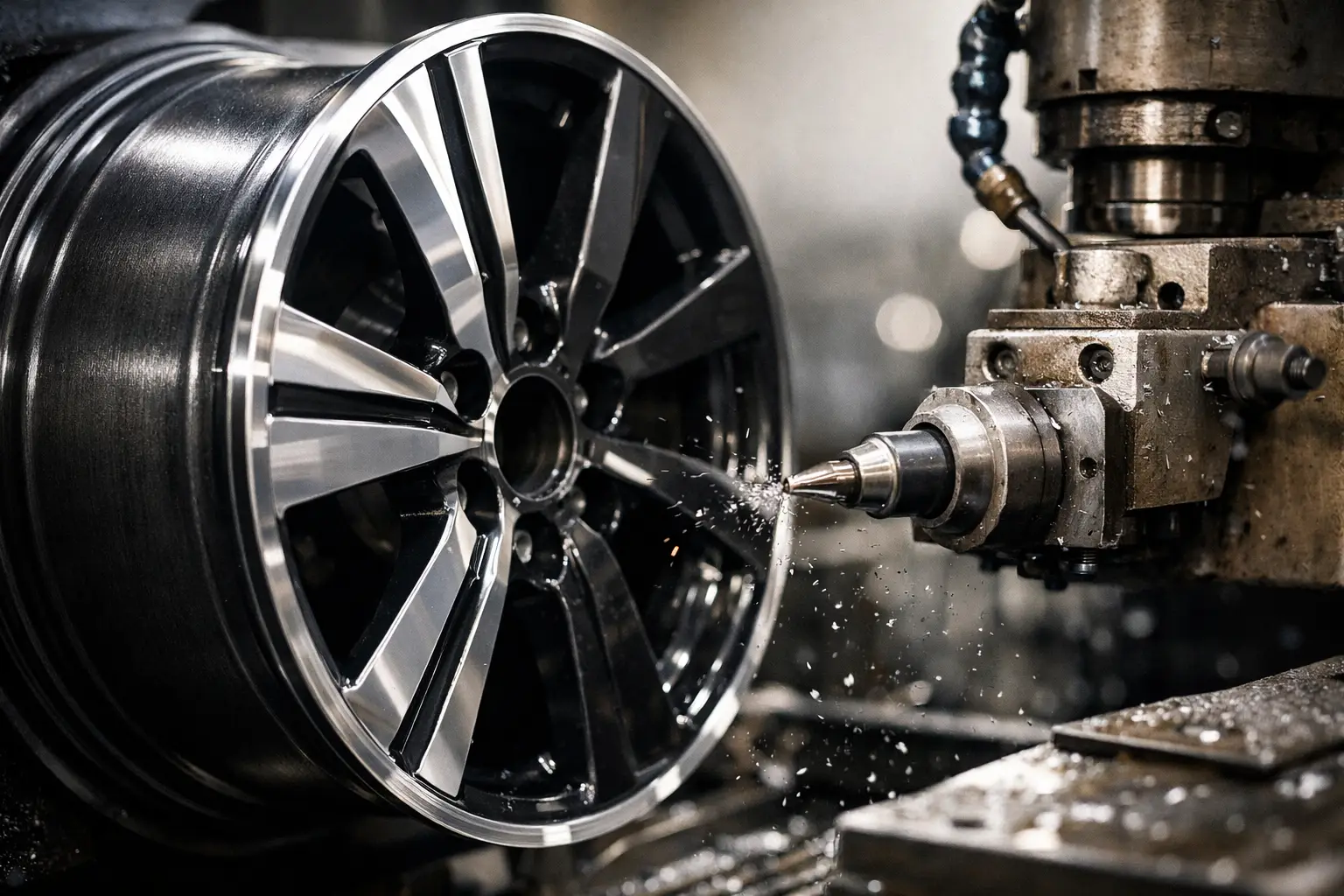
A lot of drivers ask the same question after kerbing a wheel or spotting lacquer peel around the face – is diamond cutting bad for wheels? The honest answer is no, not when it is done properly, on the right wheel, and for the right reason. The problem is that diamond cutting is a precision refurbishment process with limits, and those limits matter just as much as the finish.
For many alloy wheels, diamond cutting is an excellent way to restore the original look. It can bring back that sharp, bright machined face you see on many factory-finished wheels. But it is not a one-size-fits-all repair, and it is not the best option for every damaged wheel. If you want a result that looks right and lasts, the wheel has to be assessed properly before any metal is removed.
Is diamond cutting bad for wheels or just misunderstood?
Diamond cutting has picked up an unfair reputation because people often hear only one side of the story. Some are told it weakens wheels. Others are told it is always the best finish. Neither is quite right.
Diamond cutting is a machining process. A specialist lathe removes a very fine layer of metal from the face of the alloy wheel to create a smooth, bright finish. That fresh-cut surface is then protected with lacquer. On a wheel designed for a diamond cut finish, this can restore the original appearance extremely well.
What causes concern is the fact that material is being removed. That is true, but the amount removed during a proper refurbishment is minimal. A reputable workshop measures the wheel, checks its condition and only proceeds if there is enough material and the wheel is suitable for the process. The risk comes when a wheel is heavily damaged, has already been cut multiple times, or is refurbished by a business that prioritises speed over accuracy.
What diamond cutting actually does to a wheel
A diamond cut wheel is not painted silver in the usual sense. Its face is machined to leave fine circular lines in the metal, giving it that bright, crisp appearance. This is why it looks different from a standard powder-coated wheel.
To achieve that finish during refurbishment, the wheel usually goes through stripping, preparation, repair work where needed, coating on the inner areas and then precision cutting on the lathe. Because the machine skims the front face, the process depends on the wheel still having enough usable material and a surface that can be cut cleanly.
That means diamond cutting is a cosmetic refurbishment process, not a cure-all for every type of wheel damage. If a wheel has severe corrosion, poor previous repairs, deep gouges, cracks or structural distortion, the right answer may be a different refurbishment method or a structural repair first. In some cases, diamond cutting may not be suitable at all.
When diamond cutting is a good option
If your wheel left the factory with a diamond cut finish and the damage is mainly cosmetic, diamond cutting is often the correct repair route. Light kerb damage, lacquer failure, oxidation under the lacquer and general ageing can usually be addressed very effectively.
For many owners of Audi, BMW, Mercedes, Porsche and other premium vehicles, keeping the original finish matters. A proper diamond cut refurbishment can preserve the look of the car far better than switching the wheel to a painted finish simply because it is cheaper or quicker.
This is where specialist equipment and in-house capability make a real difference. The wheel needs to run true on the lathe, the cut needs to be controlled precisely and the finish needs to be protected correctly afterwards. Done well, the result is clean, sharp and very close to OEM appearance.
When diamond cutting can be the wrong choice
There are situations where asking for diamond cutting simply because you like the look is not the best decision. If the wheel has already been diamond cut several times in its life, there may not be enough material left to machine again safely. That does not make diamond cutting bad for wheels in general, but it does mean it can be the wrong process for that particular wheel.
The same applies if the damage is too severe. Deep kerb gouges on the face may require too much material removal to clean up properly. Corrosion can also be a factor. If the alloy has deteriorated badly, the finish after cutting may not be consistent, and durability may suffer.
There is also a practical ownership point. Diamond cut wheels look excellent, but they can be more vulnerable over time than a fully painted powder-coated finish. If moisture gets under damaged lacquer, corrosion can start and spread. For drivers who regularly cover high mileage, park on tight urban kerbs or simply want the toughest long-term finish, a painted refurbishment can sometimes be the more sensible option.
Why poor refurbishment gives diamond cutting a bad name
Most of the horror stories around diamond cut wheels start with poor process control. If a business skips proper inspection, uses limited equipment or outsources key stages without quality control, the result can be disappointing. The wheel may look acceptable at first, but lacquer failure, uneven finish or visible machining issues can appear sooner than they should.
There is also a difference between cosmetic tidying and true refurbishment. A specialist workshop will inspect the wheel for cracks, buckles, prior repairs, corrosion levels and machining limits before recommending any finish. That is the standard you want, because the goal is not just to make the wheel shiny again. The goal is to restore it properly and safely.
This is why cheaper is not always better. Diamond cutting is a skilled workshop process. If the service sounds too quick, too vague or too inexpensive to reflect the labour and machinery involved, it is worth asking exactly how the wheel is being repaired.
Is diamond cutting bad for wheels in the long term?
In long-term ownership, the real answer is that it depends on the wheel, the number of previous refurbishments and how the car is used. A wheel that has been diamond cut once or twice by a specialist and then cared for properly can continue to perform perfectly well. There is nothing inherently harmful about one correct refurbishment on a suitable wheel.
What is not realistic is endless recutting. Each time the face is machined, a little material is removed. There comes a point where further cutting is no longer advisable. A trustworthy refurbishment specialist should tell you that clearly and offer an alternative finish if needed.
That kind of honesty matters. Sometimes the best recommendation is to refinish the wheel in a painted silver, grey, black or custom finish rather than keep chasing a diamond cut look that the wheel can no longer support. A premium result is not always about repeating the original process at any cost. It is about choosing the right process for the wheel in front of you.
How to decide what is right for your wheels
The best starting point is not the finish. It is the condition of the wheel. Before anyone promises a diamond cut refurbishment, the wheel should be inspected for structural integrity, previous machining, corrosion and the depth of damage.
If the wheel is sound and within machining limits, diamond cutting can be an excellent choice. If it is not, a quality-led workshop should explain why and recommend an alternative that protects both appearance and durability. That might mean a standard powder-coated refurbishment, a custom finish, or structural repair before any cosmetic work is considered.
For drivers across Southampton, Hampshire and the South Coast, that specialist assessment is the part that protects you. At Auto Wheels, the focus is always on the correct process for the wheel, not just the most obvious sale. That is how you get a finish that looks right, lasts well and gives you confidence every time you look at the car.
So, is diamond cutting bad for wheels? No – poor judgement is. When the wheel is suitable and the work is carried out with the right equipment and standards, diamond cutting remains one of the best ways to restore the crisp factory finish that makes modern alloys stand out. If you are unsure, trust the condition report more than the sales pitch.