
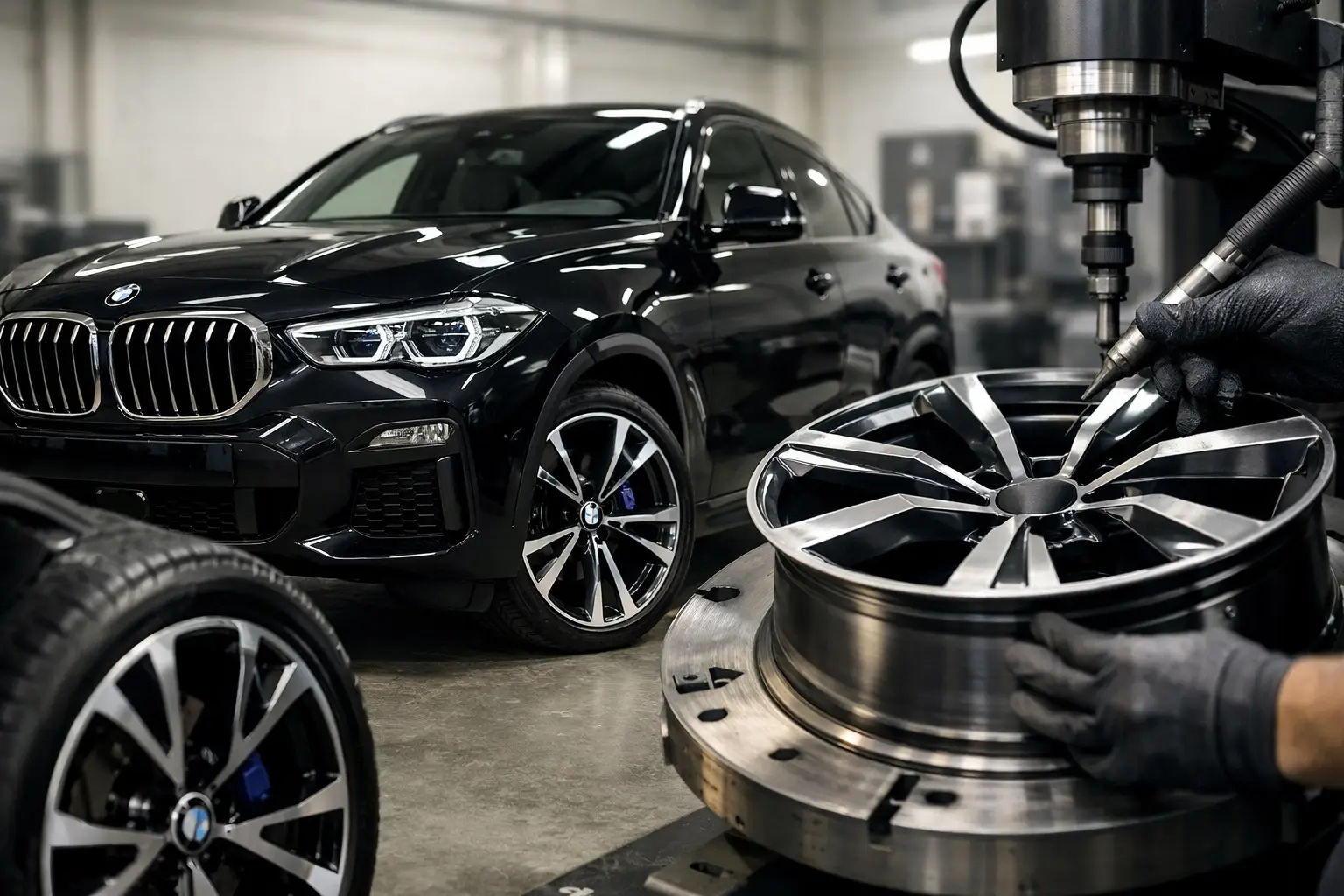
A BMW X6 arrives with exactly the sort of wheel damage we see all the time on larger premium vehicles – kerb marks around the rim edge, lacquer failure starting to creep in, and that dull, tired look that makes the whole car appear older than it is. A proper BMW X6 diamond cut repair example is useful because it shows what can genuinely be restored, what the process involves, and where the limits are.
Diamond cut wheels suit the X6 well. They give the car that crisp, machined face which works with its size and premium finish. The downside is that they are less forgiving than a painted alloy when they pick up damage. Even a relatively minor scrape can stand out immediately, and once moisture gets under compromised lacquer, the finish can deteriorate quickly.
What this BMW X6 diamond cut repair example shows
In this example, the wheel had suffered moderate kerb damage on the outer lip and visible corrosion beneath the lacquer across parts of the face. Structurally, it was sound, which matters. Cosmetic refurbishment and structural repair are not the same thing, and any reputable workshop will assess both before committing to the job.
On a BMW X6, wheel size and design add another layer. These wheels are often large diameter, low profile fitments, and the diamond cut surface tends to cover a broad visible area. That means poor repairs show up fast. It also means preparation and machining need to be exact if you want an OEM-quality result rather than something that simply looks better from a distance.
The aim in this case was not to disguise damage. It was to return the wheel to a clean, sharp, factory-style appearance with the correct lacquer protection and a finish consistent with the other wheels on the vehicle.
Why diamond cut wheels need a specialist process
A diamond cut wheel is not just painted silver and lacquered. The face is machined on a lathe after preparation, removing a very fine layer from the surface to create that bright, precise metal finish. The lacquer is then applied over the machined face to protect it.
That is why diamond cutting cannot be treated like a quick touch-in or a mobile cosmetic repair. If the machining is poor, the lines in the surface can look uneven. If too much material has already been removed in previous refurbishments, the wheel may reach its refurbishment limit. If preparation is rushed, corrosion can return beneath the lacquer.
This is also where in-house capability matters. When the full process is completed by specialists using the right equipment, quality control is tighter and turnaround is more dependable.
The starting condition
This BMW X6 wheel had three common issues. First, kerb damage had marked the outer edge. Secondly, there were signs of white worm corrosion under the lacquer on the diamond cut face. Thirdly, the finish no longer matched the cleaner wheels on the car, which is often the real point at which owners decide to act.
If left alone, cosmetic damage does not always stay cosmetic. Once lacquer is breached, road salt, brake dust and moisture can accelerate deterioration. On a vehicle like the X6, where the wheels are such a visible part of the overall look, that decline is hard to ignore.
The repair process step by step
The first stage was inspection. That includes checking for cracks, buckles and previous repairs, not just looking at the face of the wheel. There is no value in refurbishing the cosmetic finish if the wheel has a structural issue that also needs attention.
Once confirmed as suitable for refurbishment, the tyre was removed and the wheel stripped. Any existing finish, corrosion and contamination had to come off completely. Proper preparation is what determines whether the final result looks right and lasts.
After stripping, the wheel was prepared for machining. Kerb damage around the rim edge was carefully dealt with so the face could be cut cleanly. Then the wheel went on the lathe for the diamond cut stage, where a fine layer was removed from the face to recreate the bright machined finish.
That machining stage is where experience shows. Too aggressive, and you remove more material than necessary. Too light, and defects remain. The goal is a crisp, even surface that restores the original look without taking more from the wheel than needed.
After machining, the wheel was lacquered and cured. This protective stage is critical. A diamond cut finish looks excellent when fresh, but durability depends heavily on the quality of preparation, coating and curing.
Matching the original look
One of the main concerns with a BMW X6 diamond cut repair example like this is whether the refurbished wheel will match the others. That depends on the wheel design, the age and condition of the remaining wheels, and whether one wheel or a full set is being done.
A single wheel can often be restored very successfully, especially where the others are still in good order. But if the remaining wheels already have lacquer degradation or slight corrosion, a newly refurbished wheel may look noticeably fresher. In those cases, owners sometimes choose to refurbish a pair or full set for consistency.
What can and cannot be repaired
This is where realistic advice matters. Kerb damage, surface corrosion and lacquer failure are often repairable if the wheel is still within safe machining tolerance. Cosmetic refurbishment can transform the appearance of a wheel that looks ready for replacement.
However, not every wheel is a candidate for another diamond cut. If a wheel has already been cut multiple times, there may not be enough material left to machine again safely. Severe corrosion can also limit what is achievable. And if the wheel has serious structural damage, the discussion shifts from cosmetic improvement to whether structural repair is possible and advisable.
That is why a proper inspection comes first. A trustworthy specialist will tell you when refurbishment is the right option and when replacement is the better long-term choice.
Expected results on a BMW X6
For this wheel, the finished result was exactly what owners of premium vehicles want – a clean machined face, sharp edges, restored gloss, and a finish that looked right on the car rather than merely acceptable in the workshop. The wheel regained that bright, premium definition which suits the BMW X6 design so well.
The important point is that diamond cut refurbishment improves appearance significantly, but it is still a repair process. On heavily used wheels or older sets, the outcome depends on starting condition. A specialist should always be honest about that. The best workshops set expectations clearly and then deliver to a high standard.
Cost versus replacement
For many BMW X6 owners, the decision comes down to value. New OEM wheels can be expensive, particularly on larger premium fitments. If the wheel is structurally sound and suitable for machining, refurbishment is often a far more cost-effective route.
That said, cheapest is rarely best with diamond cut work. A low-cost cosmetic fix may improve the look temporarily, but if the process is incomplete or the lacquer application is poor, the finish may fail sooner than expected. When you compare refurbishment options, the key question is not just price. It is who is doing the work, what equipment is being used, and whether the result is backed with confidence.
This is exactly why many customers choose specialist workshop-based services over mobile alternatives. Precision, consistency and durability matter more when dealing with diamond cut alloys.
Why this example matters for owners
A BMW X6 diamond cut repair example gives owners something practical to judge by. It shows that visible wheel damage does not automatically mean buying a new wheel, but it also shows that not all repairs are equal. The finish on a premium vehicle needs to be handled properly if you want a result that genuinely restores the appearance of the car.
For drivers across Southampton, Hampshire and the South Coast, this is often about more than tidying up kerb rash. It is about protecting the value and presentation of the vehicle, whether it is your own pride and joy or dealership stock that needs to look right before sale. Specialist refurbishment from a company such as Auto Wheels gives that process the level of care it deserves.
If your BMW X6 wheels are starting to show kerb damage, corrosion or lacquer peel, the best next step is a proper assessment. Sometimes the right repair gives you back the finish you wanted from the start – and saves you replacing a wheel that never needed replacing.