
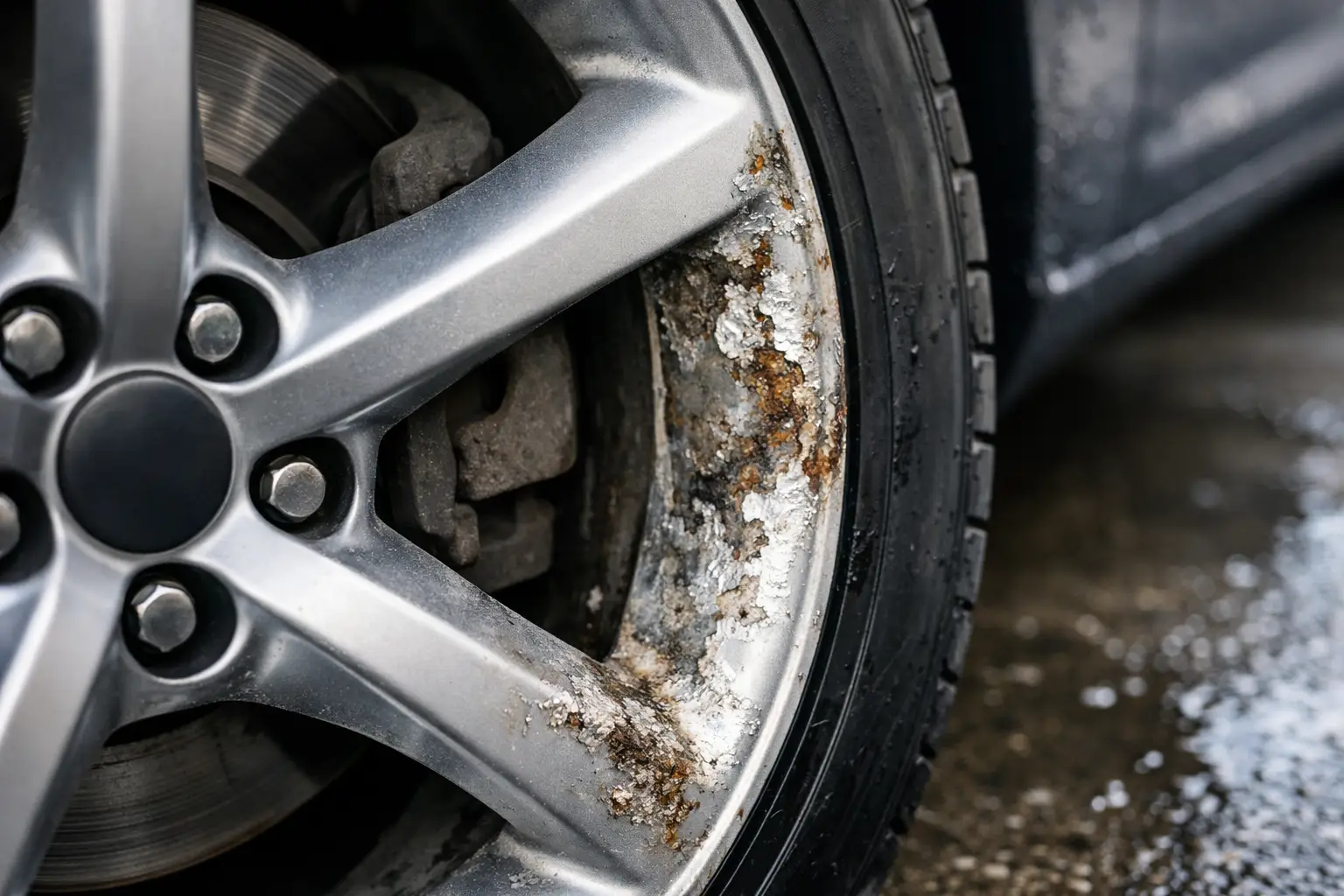
A wheel can look perfectly presentable one month, then start showing milky lacquer, bubbling paint or dark staining around the rim the next. If you are wondering what causes alloy wheel corrosion, the short answer is that moisture, road salt, brake dust and damage to the wheel’s protective finish all work together. The longer answer matters, because once corrosion gets beneath the surface coating, it rarely improves on its own.
For most drivers, corrosion starts as a cosmetic issue. Left alone, it can become harder to clean, spoil the look of the vehicle and in some cases lead to more extensive refurbishment work later. That is why understanding the cause is useful – not just for keeping wheels looking smart, but for protecting the finish and avoiding unnecessary replacement.
What causes alloy wheel corrosion in the first place?
Alloy wheels are not immune to the environment. Most are made from aluminium alloy, which is lighter than steel and well suited to modern vehicles, but it still reacts when exposed to air, water and contaminants. Manufacturers protect the wheel with primer, paint, powder coating or lacquer, and that protective layer is what keeps corrosion at bay.
The problem begins when that barrier is compromised. A stone chip, kerb scuff, poor previous repair or simple age-related wear can create a tiny opening. Water and salt then get under the finish, and corrosion starts spreading beneath it. That is why bubbling often appears larger than the original point of damage.
In the UK, winter conditions make the issue worse. Road salt is one of the biggest accelerators of alloy wheel corrosion, especially on vehicles that are driven daily and cleaned infrequently. Even premium factory finishes suffer if the wheel is repeatedly exposed to salt and brake dust without proper washing.
The most common causes of corrosion
Road salt and winter grime
Salt is highly aggressive on any exposed metal surface. On alloy wheels, it settles around the rim edge, centre cap area, bolt holes and behind the spokes. If the lacquer or paint has already been weakened, salt water finds its way underneath and starts attacking the metal below.
This is one reason corrosion often seems to appear after winter rather than during it. The damage may already be underway, but it becomes visible once the finish starts lifting.
Kerb damage and stone chips
A minor scuff can do more than mark the edge of the wheel. It can break the protective coating and expose bare alloy to the elements. The same applies to stone chips on the face of the wheel, especially on cars that cover regular motorway mileage.
Not every mark leads to serious corrosion straight away. It depends on how deep the damage is, how the wheel is maintained afterwards and how often the car is exposed to wet or salty roads. But once the finish is breached, the risk rises sharply.
Brake dust and neglected cleaning
Brake dust is corrosive in its own right. It contains metallic particles and other residues that cling to the wheel surface, especially on front wheels and performance cars with stronger braking systems. If it is left to bake on, it can stain the finish and contribute to lacquer breakdown over time.
Regular cleaning helps, but the method matters. Harsh acidic cleaners can do their own damage, particularly on older or already weakened finishes. A wheel that is cleaned with the wrong products may end up more vulnerable than one cleaned less often but more carefully.
Poor quality repairs
Not all wheel repairs are carried out to the same standard. A quick cosmetic touch-in may hide damage for a short time without properly addressing corrosion underneath. If the wheel has not been stripped, prepared and refinished correctly, trapped corrosion can return through the new coating.
This is especially relevant with diamond cut wheels, where precision matters. If the finish is not applied properly or the wheel is cut too many times over its life, durability can suffer. Specialist in-house refurbishment generally gives a more controlled and lasting result than a low-cost patch repair.
Age and finish breakdown
Even without obvious impact damage, wheel finishes degrade over time. UV exposure, repeated heat cycles from braking, road contamination and washing chemicals all take their toll. Older wheels often show corrosion around the centre bore, spoke edges or around the lip simply because the original coating has reached the end of its useful life.
That does not mean every ageing wheel is beyond repair. It does mean early intervention usually gives a better outcome than waiting until the corrosion becomes widespread.
Why diamond cut wheels are more prone to visible corrosion
Diamond cut wheels tend to show corrosion more obviously than painted wheels. That is because the finish relies on a lacquer coat over a finely machined metal surface. When moisture gets under that lacquer, the lifting and clouding are easier to see.
Corrosion on a diamond cut wheel often appears as white worm-like lines under the lacquer or as cloudy patches near the edges and around the spokes. This does not always mean the wheel is structurally unsound, but it does mean the finish has failed. Because diamond cut wheels have a precise machined face, repair quality is particularly important if you want the wheel to look right afterwards.
How to spot early signs before it gets worse
Corrosion rarely appears overnight. Most drivers first notice one of a few warning signs: bubbling under the lacquer, discolouration near a kerb mark, rough patches that do not clean off, or a dull, milky look on part of the wheel face.
It is worth checking the inner barrel too. Corrosion is not always obvious from a standing height, and inner wheel surfaces take plenty of abuse from road grime and brake dust. If a wheel keeps looking dirty shortly after washing, or the finish feels rough to the touch, it may be more than surface contamination.
Can alloy wheel corrosion be prevented?
Up to a point, yes. Prevention is mostly about protecting the finish and reducing how long contaminants stay on the wheel. Washing wheels regularly in winter makes a real difference, particularly if you drive on treated roads. Using a pH-balanced wheel cleaner instead of harsh acid-based products is also sensible.
Avoiding kerb damage helps more than most people think. One scrape may seem minor, but it can be the starting point for corrosion across a much wider section of the rim. If damage does occur, dealing with it sooner rather than later usually keeps repair options simpler.
Protective coatings can help, but they are not magic. They make cleaning easier and can reduce contamination sticking to the surface, yet they will not stop corrosion if the lacquer has already failed underneath.
When cleaning is enough and when refurbishment is needed
There is a difference between staining and corrosion. Brake dust staining may respond to proper cleaning and decontamination. Corrosion beneath lacquer will not. If the finish is bubbling, peeling or lifting, the only proper fix is refurbishment.
That process should remove the failed coating, deal with any corrosion in the metal, and refinish the wheel to the correct standard. Anything less is often temporary. For drivers who care about appearance, especially on premium vehicles, a proper workshop refurbishment is usually far more cost-effective than living with worsening corrosion or replacing the wheel entirely.
If the wheel is also cracked, buckled or heavily damaged, the cosmetic issue should not be looked at in isolation. Structural condition matters just as much as appearance, which is why specialist assessment is important.
What causes alloy wheel corrosion after refurbishment?
If corrosion returns after a previous repair, the cause is usually one of three things: the original damage was not fully dealt with, the preparation was poor, or the wheel has been exposed again through fresh chips or scuffs. Occasionally, unrealistic expectations are part of the issue too. A refurbished wheel still needs proper care, especially through winter.
A quality repair should last well when the process is done correctly and the wheel is maintained properly. Businesses such as Auto Wheels focus on in-house specialist refurbishment for exactly this reason – control over preparation, finishing and final quality makes a significant difference to durability.
The key thing is not to ignore the first signs. Corrosion spreads under the finish, and the longer it is left, the more intrusive the repair may become. If your wheels are showing bubbling lacquer, white worming or persistent staining that will not clean away, it is usually time to have them professionally assessed before a small finish problem turns into a bigger one.