
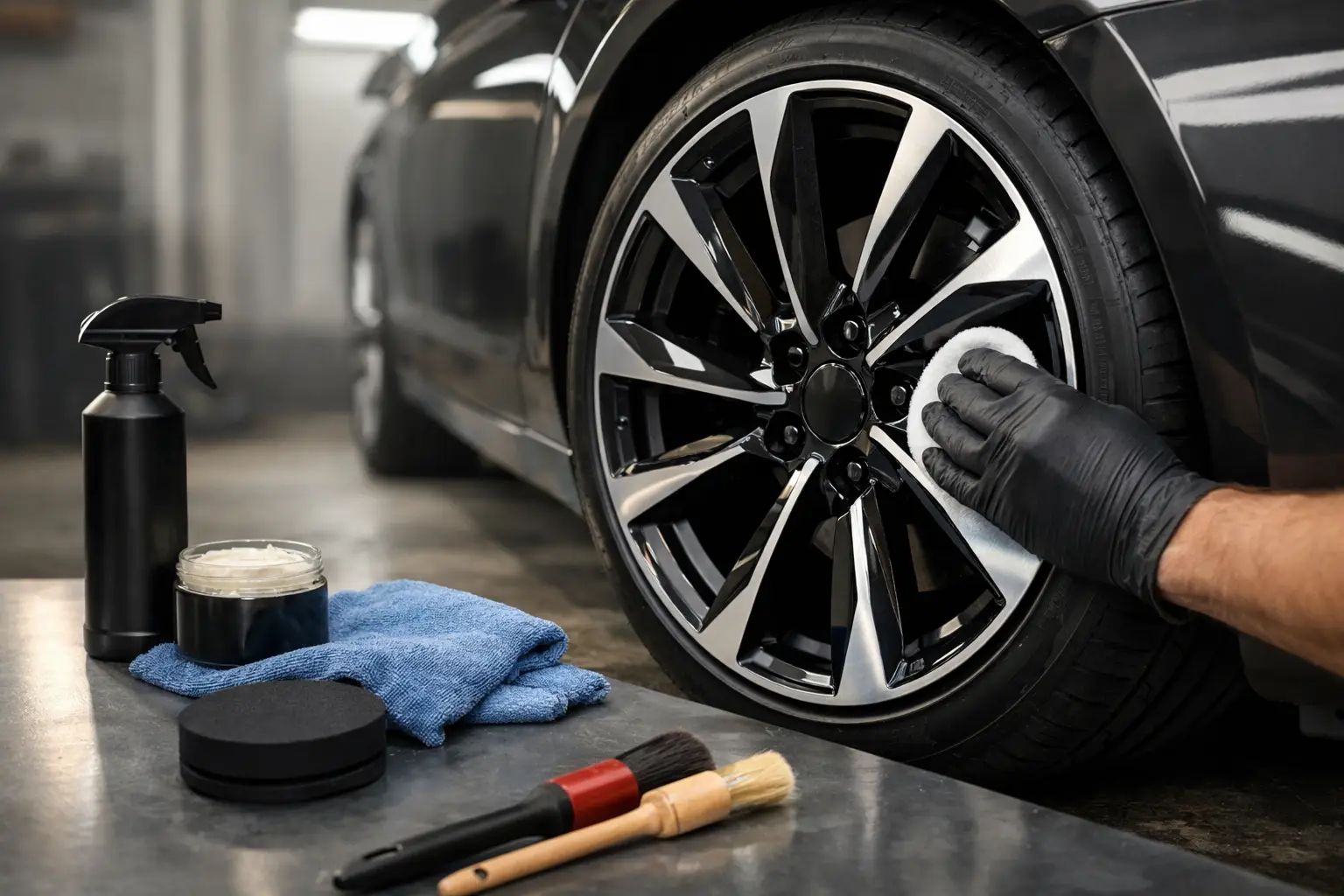
Freshly refurbished diamond cut alloys can transform a car. The problem is that the same finish that looks crisp and premium also shows neglect quickly. This diamond cut wheel care guide is designed to help you protect that sharp machined face, avoid early corrosion and keep your wheels looking right for as long as possible.
Diamond cut wheels are not the same as painted alloys. Their finish is created by removing a fine layer of metal from the wheel on a specialist lathe, then sealing it with lacquer. That combination gives the wheel its bright, precise appearance, but it also means the surface is less forgiving when poor cleaning habits, kerb damage or harsh chemicals get involved.
Why diamond cut wheels need different care
A standard painted wheel has a more uniform coating across the face. A diamond cut wheel has a machined metal surface under lacquer, and that finish is more vulnerable to moisture ingress once the lacquer is compromised. Even a small chip, stone impact or scratch can create an entry point for corrosion.
That is why owners of premium, performance and prestige vehicles often notice the issue early. White worm corrosion, lacquer peel and dull patches tend to stand out more on diamond cut alloys than on darker painted finishes. It does not always mean the wheel was poorly refurbished or manufactured. In many cases, it comes down to use, cleaning routine, storage conditions and road exposure.
If you drive regularly on salted winter roads around Hampshire and the South Coast, your wheels have a tougher life than a car used only on dry weekends. Brake dust, road salt and standing grime all work against the finish. Good care will not make a wheel immune to wear, but it will slow the process down significantly.
Diamond cut wheel care guide: how to wash them properly
The safest approach is also the simplest. Clean your wheels little and often rather than letting heavy contamination build up. Once brake dust and road film are baked on, you are more likely to reach for aggressive products or brushes, and that is where damage starts.
Start with cool wheels. If you wash them straight after a drive, heat can cause cleaning products to dry too quickly and leave marks on the lacquer. Rinse first to remove loose grit, then use a pH-neutral wheel cleaner or gentle car shampoo with a soft wheel mitt or brush designed for alloy wheels.
Take extra care around the edges of the spokes, the centre area and the inner barrel. Dirt trapped in these areas tends to hold moisture. Use a separate wash bucket and tools for the wheels so you are not dragging brake dust across the bodywork or vice versa.
Once cleaned, rinse thoroughly and dry with a soft microfibre cloth. Letting the wheels air dry can leave water spots, especially in hard water areas. Drying also gives you a chance to spot chips, scratches or bubbling before they develop into a bigger refurbishment job.
What to avoid on diamond cut alloys
This is where many good-looking wheels lose their finish too early. Strong acidic or highly alkaline wheel cleaners can attack the lacquer, particularly if used frequently or left dwelling too long. The same applies to traffic film removers and some off-the-shelf fallout removers if they are not suitable for delicate finishes.
Avoid stiff brushes, abrasive pads and automatic car washes that use harsh chemicals. They may save time, but they are rarely kind to a machined and lacquered surface. If your wheels have stubborn contamination, use a gentler product and more patience rather than more force.
Pressure washers also need a bit of common sense. They are useful for rinsing, but a concentrated jet held too close to damaged lacquer can make an existing problem worse. If there is already a chip or lifted edge, treat the area carefully and get it assessed before corrosion spreads.
Protecting the finish between washes
Protection makes maintenance easier. A quality wheel sealant or ceramic-safe protective coating can help reduce brake dust bonding and make routine washing less of a chore. The key point is compatibility. Not every coating product suits every finish, so it is worth choosing one intended for lacquered alloy wheels.
Protection is not a substitute for cleaning, but it does give the surface a fighting chance. If your car is used daily, especially through winter, a protective layer can make a noticeable difference to how quickly grime builds up and how hard you need to work to remove it.
It is also worth washing road salt off more frequently in colder months, even if the car itself does not look especially dirty. Salt tends to sit in the areas you do not always notice at a glance, and that prolonged contact is bad news for any alloy finish.
Kerb damage, chips and why small marks matter
A lot of drivers put off dealing with minor wheel damage because the wheel still looks presentable from a distance. With diamond cut alloys, that can be a false economy. A small kerb graze or stone chip may seem cosmetic, but if it breaks the lacquer, moisture can get underneath and start the corrosion process.
Once white worm corrosion spreads under the lacquer, the damage becomes more obvious and the repair becomes less straightforward. Early attention matters. If you spot a mark, get it checked rather than waiting to see if it worsens.
There is also a practical limit to how many times a wheel can be diamond cut. Because material is removed during the machining process, repeated refurbishments are not endless. That is one reason proper care is worth taking seriously from the start. Looking after the finish helps preserve both appearance and future refurbishment options.
Diamond cut wheel care guide for winter driving
Winter is the toughest season for these wheels. Road salt, wet conditions and grime build-up create exactly the environment that encourages lacquer failure and corrosion. If you use your car every day, weekly checks are sensible, even if full washing is not always possible.
A quick rinse to remove salt is better than doing nothing. If your wheels are already showing stone chips or edge damage going into winter, it is wise to have them inspected. Exposed areas tend to deteriorate faster once the weather turns.
Some owners of high-value or performance cars choose to run a second set of wheels through winter and keep their diamond cut alloys for the rest of the year. That will not suit everyone, but it is a sensible option if preserving finish quality is a priority.
When cleaning is no longer enough
There comes a point where careful maintenance will not reverse the issue. If the lacquer has started to peel, corrosion is visible beneath the surface or the wheel face has become heavily marked, refurbishment is the proper fix. Trying to polish out damage on a diamond cut wheel usually does more harm than good.
This is where specialist equipment and in-house capability matter. A proper diamond cut refurbishment is not a mobile touch-up service. The wheel needs to be assessed, stripped, prepared, machined accurately and refinished to a high standard. Shortcuts tend to show, especially on brighter finishes where inconsistencies are easy to spot.
For drivers who want OEM-quality results, the difference between a cosmetic temporary improvement and a proper workshop process is significant. The finish, durability and precision are not the same.
Choosing the right approach to maintenance and repair
Not every wheel issue calls for immediate refurbishment, and not every owner uses their car in the same way. A daily-driven family SUV will face different conditions from a weekend sports car. That is why the right approach depends on how the vehicle is used, where it is driven and how quickly damage is dealt with.
If your wheels are in good condition, regular gentle cleaning and sensible protection are usually enough. If there are chips, bubbling or early corrosion, professional advice is the smarter route. Leaving it too long rarely saves money.
At Auto Wheels, we see this first-hand with everything from everyday hatchbacks to premium German performance models. The owners who get the best lifespan from diamond cut alloys are usually not the ones using expensive products. They are the ones who clean them properly, avoid harsh chemicals and act early when damage appears.
Diamond cut wheels reward careful ownership. Treat the finish with a bit of respect, keep on top of small issues, and they will continue to lift the whole look of the car long after the first refurbishment.