
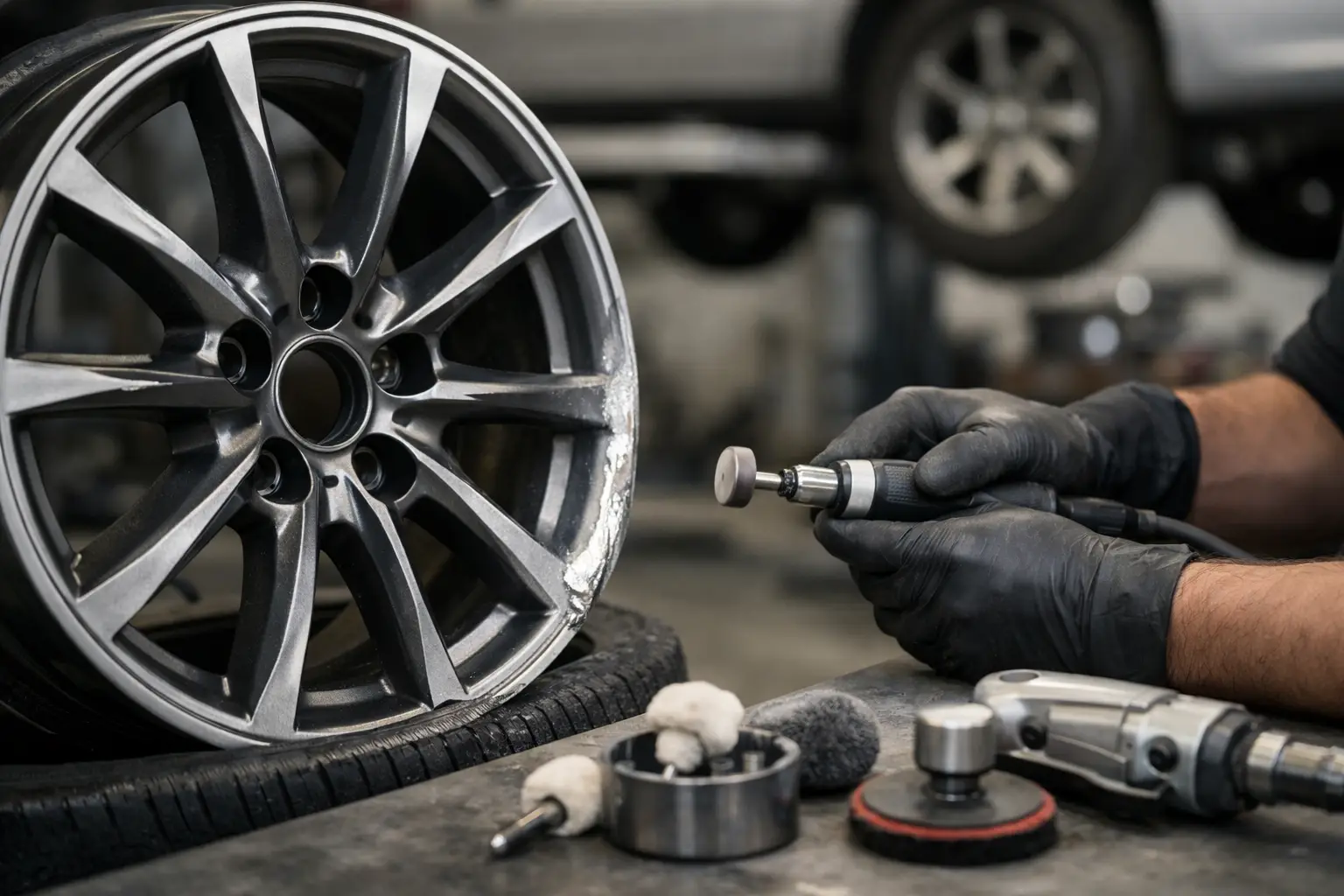
A kerbed wheel can spoil the look of the whole car. Worse still, if a wheel is cracked or buckled, the issue goes beyond appearance and starts to affect safety, tyre wear and how the vehicle drives. So, what is alloy wheel repair? Put simply, it is the process of restoring a damaged alloy wheel so it is safe, presentable and finished to a high standard again.
That can mean anything from correcting light cosmetic scuffs to carrying out specialist structural repairs and a full refurbishment. The right repair depends on the type of damage, the wheel design and the finish already on the wheel. Done properly, alloy wheel repair is a cost-effective alternative to replacement and can return a wheel close to original condition.
What is alloy wheel repair and what does it cover?
Alloy wheel repair is a specialist service that deals with damage to aluminium alloy wheels. Most drivers first notice cosmetic damage – kerb marks, lacquer peel, corrosion, chips or staining that makes the wheel look tired. Those faults affect appearance and can reduce the value of the vehicle, particularly on premium cars where wheel condition is closely scrutinised.
There is also structural damage to consider. A pothole impact can leave a wheel buckled, and in some cases cracked. That can lead to vibration through the steering, poor sealing against the tyre, pressure loss or uneven running. In those cases, repair is not about aesthetics alone. It is about restoring the wheel to a usable and roadworthy condition, where repair is viable and safe.
This is why alloy wheel repair is not one single process. It is an umbrella term for assessment, preparation, corrective work, refinishing and final inspection. Some wheels need a quick cosmetic intervention. Others require machining, welding, straightening and a complete recoat.
The most common types of alloy wheel damage
For most UK drivers, kerb damage is the usual starting point. Parallel parking, tight car parks and sharp kerb edges can scrape the outer rim, removing paint and cutting into the metal. It may seem minor, but even light damage can stand out badly on a freshly cleaned car.
Corrosion is another regular issue, especially on older wheels or wheels exposed to winter roads. Once moisture gets under the lacquer, the finish can blister and lift. Diamond cut wheels are particularly prone to this over time because the protective coating sits over a very fine machined surface.
Then there is impact damage. Potholes and poor road surfaces can knock a wheel out of shape, creating a buckle. In more serious cases, the impact causes a crack. Not every cracked or buckled wheel is suitable for repair, which is why professional inspection matters. A proper workshop will tell you clearly whether the wheel can be repaired to an acceptable standard or whether replacement is the better option.
How alloy wheel repair is carried out
The first stage is inspection. A specialist needs to identify whether the damage is cosmetic, structural or both. That includes checking the face of the wheel, the inner barrel, the rim edge and the existing finish. It also means looking at the age and previous history of the wheel, because repeated low-quality repairs can limit what can be done later.
If the wheel is suitable for repair, the tyre is usually removed so the wheel can be worked on properly. Cosmetic damage is then stripped back, and the wheel is prepared for refinishing. Depending on the service, this may involve sanding, filling minor imperfections, treating corrosion and applying primer, colour and lacquer.
For structural repairs, the process is more technical. A buckle repair involves carefully straightening the wheel to restore its shape. A crack repair typically involves specialist welding followed by reshaping and inspection. These are not jobs for quick mobile touch-ups. Structural work needs the right equipment, experienced hands and proper quality control.
Refinishing is where the final result is won or lost. A wheel can be structurally sound, but if the finish is poor, patchy or mismatched, it still lets the car down. Quality preparation, controlled curing and accurate colour matching make a visible difference.
Cosmetic repair versus full refurbishment
Not every damaged wheel needs a complete refurbishment. If the issue is a localised scuff on an otherwise healthy wheel, a cosmetic repair may be enough. This can improve the appearance significantly and costs less than a full strip and refinish.
That said, there are times when a full refurbishment is the better investment. If the wheel has widespread kerbing, corrosion under the lacquer or multiple areas of damage, treating one section alone can leave the rest of the finish looking tired. A full refurbishment gives the wheel a more consistent, factory-style appearance.
It depends on the age of the wheel, the standard you want and how long you plan to keep the vehicle. For a lease return, a neat cosmetic repair may be perfectly sensible. For a cherished car or a premium vehicle, a full refurbishment often delivers the result owners expect.
What about diamond cut alloy wheel repair?
Diamond cut wheels need separate mention because the repair process is different. These wheels have a painted base coat and a front face that is cut on a lathe to create a bright metallic finish. They look sharp when fresh, but they are less forgiving when damaged or corroded.
A proper diamond cut alloy wheel repair requires specialist machining equipment and in-house capability. The face of the wheel is skimmed precisely to remove damage and recreate the original look, before being lacquered. This is a skilled process, and there is a limit to how many times a wheel can be cut because a small amount of metal is removed each time.
That matters because not every operator offering wheel repair can carry out diamond cutting to the right standard. Some businesses outsource it, which can mean delays and less control over finish quality. For customers who care about accuracy, consistency and turnaround, workshop capability makes a real difference.
Is alloy wheel repair safe?
This is the question that matters most, and the honest answer is that it depends on the damage and who carries out the work. Cosmetic repairs are generally straightforward when done properly. Structural repairs require more judgement. Some cracks can be repaired safely by specialists. Some wheels are too badly damaged, too compromised or simply not worth the risk.
A reputable repairer will inspect the wheel carefully and advise accordingly. They will not promise to save every wheel at any cost. That is often the difference between a specialist service and a cheap quick fix. The aim should always be a repair that is sound, reliable and backed by clear workmanship standards.
For the customer, reassurance comes from specialist equipment, experienced technicians and a business willing to stand behind its work. That is especially important for owners of heavier SUVs, performance models and prestige vehicles, where wheel loads and customer expectations are both higher.
Why repair instead of replace?
New alloy wheels can be expensive, especially for larger diameters, diamond cut finishes or manufacturer-specific designs. Repairing a damaged wheel is often far more cost-effective, particularly when the alternative is replacing a full set to maintain a matching finish.
There is also the practical side. Repair can preserve the original wheel fitted to the car, which matters to owners who want to keep the vehicle looking correct. For dealerships and trade customers, refurbishment is often the most efficient way to prepare stock to a saleable standard without unnecessary parts cost.
Of course, repair is not always the right answer. If the wheel is heavily compromised, replacement may be the sensible route. But where repair is appropriate, it can restore both appearance and performance for a fraction of the cost of buying new.
Choosing the right specialist
If you are comparing services, the cheapest quote rarely tells the full story. The quality of preparation, paint system, machining accuracy and inspection process all affect the result. So does whether the work is completed properly in-house or passed elsewhere.
Look for a specialist that deals with both cosmetic and structural repairs, understands different wheel finishes and offers a clear warranty on workmanship. That combination gives confidence that the repair is being approached properly, not simply covered over.
For drivers across Southampton, Hampshire and the South Coast, that level of care matters. Whether the wheel belongs to a family hatchback, a prestige saloon or a performance SUV, the principle is the same – precision work produces a better finish, better durability and better peace of mind.
At its best, alloy wheel repair is not just about making a wheel look better for a few weeks. It is about restoring the standard of the car in a way that feels right every time you walk up to it.