
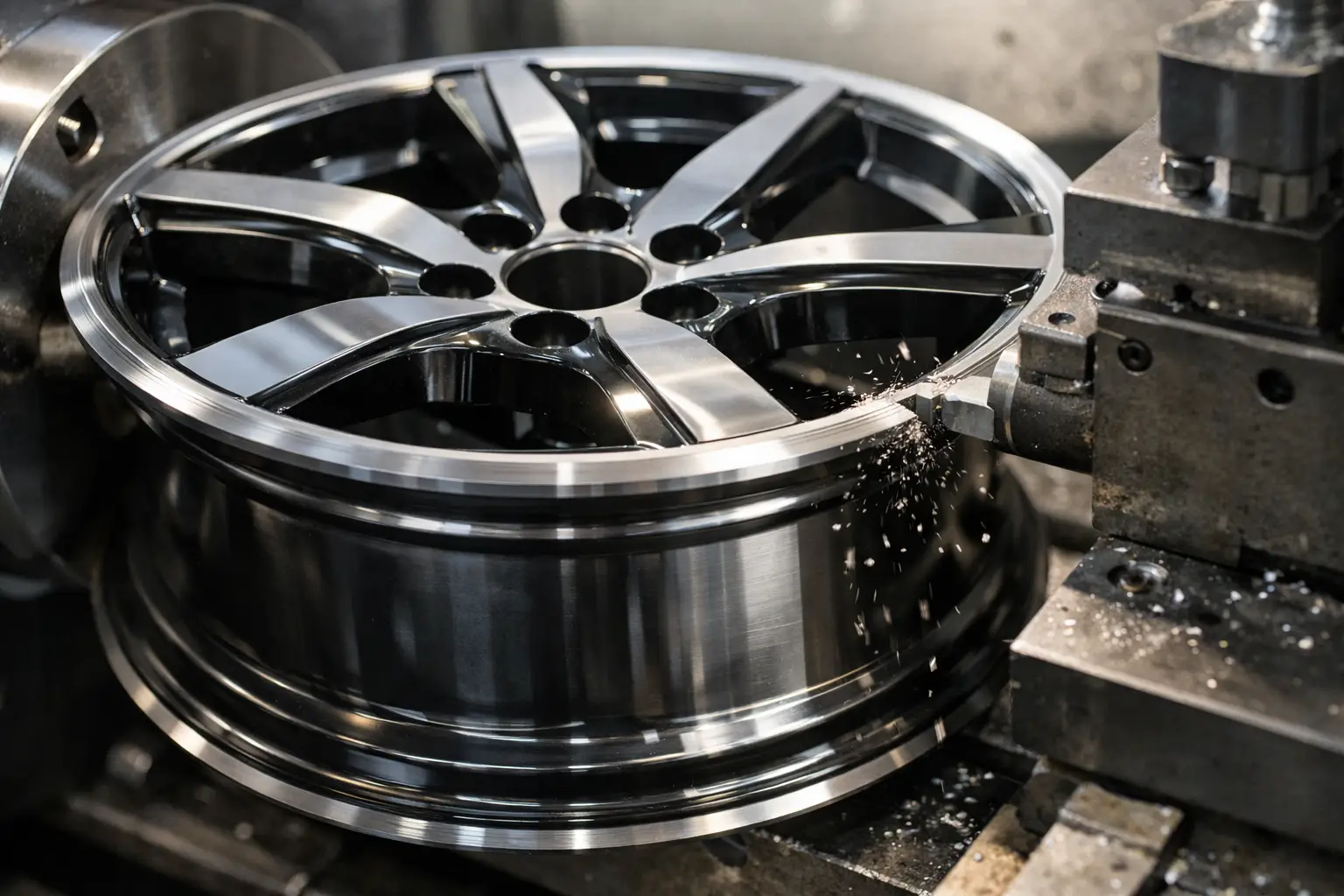
Kerbed a diamond cut alloy and the damage tends to stand out straight away. Scrapes, lacquer corrosion and dulling are far more obvious on this finish than on a painted wheel. That is why diamond cut refurbishment is one of the most requested specialist services for drivers who want their wheels looking right again without paying for full replacement.
Diamond cut wheels have a distinctive look because the face of the alloy is machined on a lathe after painting. That process creates the bright, fine-lined finish you see on many modern Audi, BMW, Mercedes, VW and performance models. It looks sharp and premium, but it also means refurbishment needs to be carried out properly, with the right equipment and the right level of control.
What diamond cut refurbishment actually involves
A proper diamond cut refurbishment is not a quick cosmetic touch-up. The wheel is removed, inspected and stripped back so the underlying condition can be assessed. Any kerb damage, corrosion or surface defects are dealt with before the wheel is repainted in the chosen base colour.
Once the painted areas are cured, the wheel goes onto a specialist lathe. A very fine layer is cut from the face of the alloy to restore the bright metal finish. The wheel is then lacquered to protect it and baked again. If the process is rushed, or if the preparation is poor, the final result will not last. The finish may look acceptable for a short time, but defects tend to come back quickly.
That is the key difference between specialist in-house refurbishment and lower-grade repair methods. Diamond cutting is a precision process. It relies on correct prep, accurate machining and proper finishing, not just making the wheel look better for a few weeks.
Why diamond cut wheels need specialist treatment
Not every wheel refurbishment service is set up for diamond cutting. Standard painted alloys can often be refinished effectively with more straightforward workshop methods. Diamond cut wheels are different because the final appearance depends on machining accuracy as much as paint quality.
If a wheel is heavily corroded, poorly repaired in the past or structurally damaged, the job becomes more complex. The wheel may need crack repair, buckle correction or more extensive prep work before the cosmetic stage can even begin. In some cases, a painted finish may be the better long-term option if the wheel has already been cut too many times.
That is why a good refurbishment company will assess the wheel first rather than promising the same answer every time. The right recommendation depends on the wheel design, the level of damage and how many times it has been refurbished previously.
When diamond cut refurbishment is the right choice
Diamond cut refurbishment is usually the right option when the wheel originally left the factory with a diamond cut face and you want to keep that OEM-style appearance. For many owners, especially on premium vehicles, changing to a fully painted finish can alter the look of the car more than they would like.
It is also a strong choice when damage is mainly cosmetic. Light to moderate kerbing, lacquer peel, white worm corrosion and general age-related deterioration can often be resolved very effectively with the proper process. A fresh diamond cut finish restores the crisp, bright look that makes these wheels stand out in the first place.
Where it becomes more of a judgement call is with older wheels that have already had previous machining. Diamond cutting removes a fine layer from the wheel face each time, so there is a practical limit. A specialist workshop should be clear about that. If preserving wheel integrity means recommending a different finish, that is the responsible advice.
The limits of diamond cut refurbishment
This is where honesty matters. Diamond cut refurbishment delivers excellent visual results when the wheel is suitable, but it is not a magic fix for every alloy.
Deep corrosion can sometimes run beyond the surface. Previous poor repairs can leave uneven faces or filler work that is not suitable for machining. Structural issues such as cracks and buckles need to be dealt with first and, in some cases, may rule out refurbishment altogether if the wheel cannot be restored safely.
There is also the question of durability in real-world UK conditions. Diamond cut wheels look superb, but they can be more vulnerable to visible lacquer failure over time than a straightforward painted wheel, especially if the vehicle is exposed to road salt, harsh cleaners or frequent kerb contact. That does not mean you should avoid them. It simply means the finish needs to be maintained properly and expectations should be realistic.
How to tell if a refurbisher is doing the job properly
For customers, the challenge is not understanding the theory. It is knowing whether the business you choose is genuinely equipped to do the work to a high standard.
The first sign is whether diamond cut refurbishment is carried out in-house. If the process is outsourced, turnaround times can stretch and quality control becomes less direct. A specialist with the right machinery on site has far more control over preparation, machining and finishing.
The second sign is whether they inspect more than the visible damage. A proper service should consider the wheel’s overall condition, including cracks, buckles and corrosion. Cosmetic work only makes sense if the wheel is structurally sound.
The third sign is whether the business stands behind the work. A warranty is not just a sales point. It shows confidence in the process, materials and workmanship. For many motorists, that reassurance matters as much as the appearance of the final finish.
Diamond cut refurbishment vs replacement
A lot of drivers assume a damaged diamond cut alloy has to be replaced, particularly when the car is relatively new or high value. In many cases, that is simply not necessary.
Refurbishment is often a far more cost-effective route, especially when the damage is localised and the wheel is otherwise sound. The visual result can be extremely close to factory appearance when carried out by specialists using proper equipment. For dealership stock, lease returns and privately owned premium vehicles, that makes refurbishment a practical and commercially sensible option.
Replacement may still be the better route if the wheel is beyond safe repair, if it has already reached its refurbishment limit, or if corrosion is too advanced. A trustworthy workshop will say so. The aim should never be to push refurbishment where it is not appropriate. It should be to give you the best available outcome for the wheel in front of them.
Looking after diamond cut wheels after refurbishment
Once a wheel has been refurbished, maintenance plays a big part in how long the finish keeps its best appearance. Diamond cut alloys should be cleaned regularly with pH-neutral products and soft brushes or cloths. Aggressive acidic cleaners can attack the lacquer, and allowing brake dust to build up for long periods does the finish no favours either.
It also helps to deal with fresh kerb damage quickly. Even small breaks in the lacquer can let moisture in, and that is when corrosion starts to spread. If you catch damage early, your options are usually better.
For drivers covering high mileages or using the car year-round, especially through winter, it is worth being realistic. Diamond cut wheels are a premium-looking finish, but they reward careful upkeep. If low-maintenance durability is your main priority, a painted finish may suit you better. If appearance is the priority, diamond cutting remains hard to beat.
Why the finish quality matters
With alloy wheels, poor workmanship is rarely hidden for long. Lacquer issues, inconsistent machining and missed prep work tend to show themselves once the wheel is back on the road. That is why quality-led refurbishment matters.
A proper result should look clean, sharp and even across the wheel face, with no shortcuts in the painted areas or the lacquered finish. Just as importantly, the process should be built around the wheel’s condition, not around the fastest possible turnaround. That is the standard expected by careful private owners and by trade customers preparing vehicles for sale.
At Auto Wheels Ltd, that specialist approach is exactly why customers choose an in-house service backed by experience, precision equipment and a 12-month warranty. It gives motorists confidence that the wheel has been refurbished properly, not simply improved enough to get by.
If your alloys have lost their finish, the best next step is not to guess whether they need replacing. It is to have them assessed properly, because the right refurbishment can make a damaged wheel look smart again and help the whole car feel cared for.