
A scuffed alloy can look like a quick cosmetic job until the damage is deeper than it first appears. That is where the difference between in-house refurbishment vs mobile repair starts to matter. If you care about finish quality, wheel safety and long-term value, the method used is just as important as the repair itself.
For many drivers, mobile repair sounds appealing. It is convenient, often cheaper at first glance and can work well for very light cosmetic damage. But alloy wheels are not all the same, and neither are repairs. The right option depends on the type of damage, the finish on the wheel and the standard you expect when the job is done.
In-house refurbishment vs mobile repair: what is the difference?
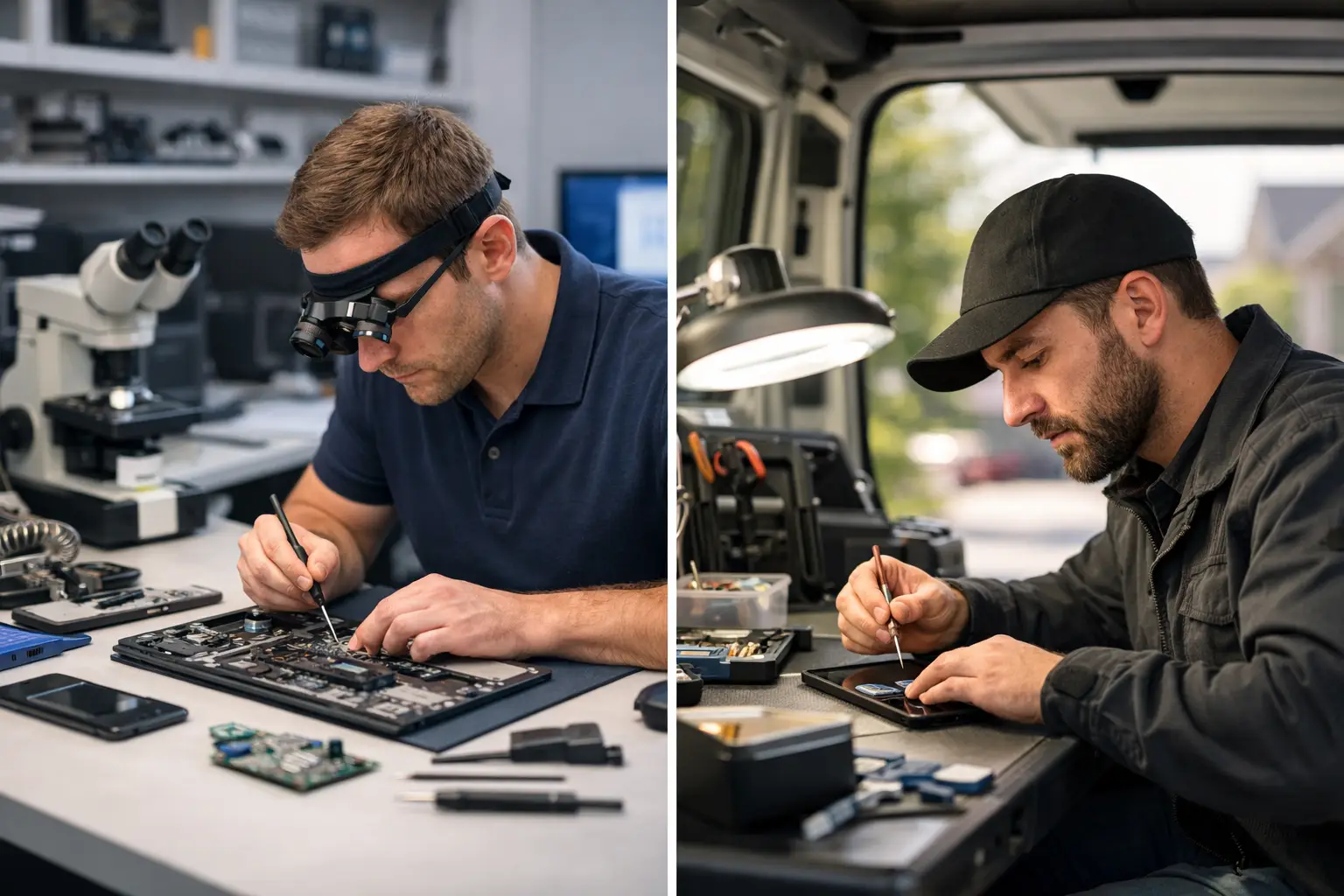
Mobile repair is usually carried out at your home or workplace using portable equipment. In most cases, it is designed for minor cosmetic improvements rather than full restoration. A technician may sand back localised damage, fill where needed and repaint the affected area. For small kerb marks on a standard painted wheel, that can sometimes be a practical short-term fix.
In-house refurbishment is completed in a dedicated workshop with specialist machinery, controlled preparation and the right refinishing processes. The wheel is removed from the vehicle, fully inspected and repaired using equipment that simply cannot be replicated from the back of a van. That matters for both cosmetic quality and structural integrity.
If the wheel needs crack repair, buckle correction or diamond cutting, a workshop setting is not a luxury. It is the proper environment for the job.
Why the repair environment affects the result
Alloy wheel refurbishment is not just about covering damage. The surface needs to be properly stripped, prepared and refinished so the final result is even, durable and close to the original factory look. That is far easier to achieve in a controlled workshop than on a driveway in changing weather.
Paint application, curing conditions and machining accuracy all affect the final finish. Dust, moisture and temperature can compromise the appearance and lifespan of a repair. An in-house process gives far more control over each stage, from preparation through to lacquer.
That is one reason workshop refurbishment tends to deliver a more consistent result, especially on premium vehicles where the finish is more obvious and customer expectations are rightly higher.
Diamond cut wheels need specialist equipment
This is where mobile repair often reaches its limit. Diamond cut alloys require the wheel to be placed on a lathe so a fine layer of metal can be machined from the face. That is how the bright, precise finish is created. It is not a process that can be reproduced properly with a handheld repair.
Some mobile services offer cosmetic alternatives that imitate the look, but they are not true diamond cut refurbishment. For drivers who want an OEM-quality finish rather than a close-enough result, that distinction is significant.
Structural damage should never be treated as a cosmetic job
A wheel that has suffered a pothole impact may have more than visible scuffing. Buckles, hairline cracks and distortion can affect how the wheel performs on the road. You may notice vibration, pressure loss or uneven tyre wear. You may notice nothing at all until the problem worsens.
A proper in-house inspection allows the wheel to be checked thoroughly before any repair begins. If structural work is needed, specialist equipment and experienced technicians are essential. Mobile cosmetic repair is not a substitute for proper crack repair or wheel straightening.
When mobile repair can make sense
There is a place for mobile repair. If the damage is light, the wheel is a standard painted finish and you need a convenient visual improvement, it can be a reasonable option. For lease returns, older vehicles or drivers who simply want the marks made less noticeable, it may do the job.
The key is being realistic about what mobile repair is designed to achieve. It is usually best suited to small-area cosmetic correction, not full refurbishment. If you are expecting a factory-level finish or dealing with anything beyond surface damage, a workshop route is normally the better decision.
Price often drives the comparison, but cost on its own can be misleading. A cheaper repair that does not last, does not match properly or does not address underlying damage is not necessarily better value.
In-house refurbishment vs mobile repair on finish quality
Finish quality is where the gap becomes most visible. A full in-house refurbishment is built around complete preparation and refinishing rather than blending into one damaged section. That usually gives a cleaner, more uniform result across the whole wheel.
Colour matching is also more dependable in a workshop process, particularly on wheels with specialist finishes, multiple layers or lacquer systems. On prestige and performance vehicles, even a slight mismatch can stand out. Owners who take pride in the appearance of their car tend to notice these details straight away.
For dealerships and trade customers, consistency matters just as much. One repaired wheel that looks slightly different from the other three can let down the presentation of the entire vehicle.
Durability matters after the repair
A wheel can look improved on the day and still disappoint a few months later. Poor preparation or inferior refinishing can lead to peeling lacquer, fading, corrosion creep or visible repair edges. That is frustrating for any driver, but especially so if the wheel looked fine at collection.
A quality-led workshop process is designed for durability, not just immediate appearance. Proper prep, the right coatings and controlled curing all contribute to a finish that holds up better in real-world use.
This is also where warranty-backed work offers reassurance. Confidence in the repair usually reflects confidence in the process behind it.
Safety, value and the cost question
Most drivers start by asking what the repair costs. A better question is what standard of repair you are paying for. If a mobile service can genuinely resolve minor cosmetic damage to your satisfaction, it may be a sensible spend. But if the wheel needs full refurbishment or structural attention, choosing the cheapest route can become expensive quickly.
A poor repair may need redoing. A missed buckle may continue causing vibration. A crack that is not properly identified can become a serious issue. On higher-value vehicles, a substandard finish can also affect overall presentation and resale appeal.
Workshop refurbishment often costs more because more is involved – more time, more equipment, more preparation and a broader technical capability. For many customers, that extra cost is justified by the finish, reliability and peace of mind.
How to decide which option is right for your wheels
Start with the type of damage. Light kerbing on a painted wheel is very different from corrosion, lacquer failure, a bent rim or damage to a diamond cut finish. Then consider the car itself and your expectations. If you drive a premium vehicle, maintain it carefully and want the wheel restored properly, a specialist in-house service is usually the right fit.
It is also worth thinking beyond convenience. Having a repair carried out at home may save time in the short term, but if the result falls short or does not last, the convenience disappears quickly.
A reputable specialist should be clear about what can be repaired, what process is being used and what standard of finish you can expect. If a service cannot properly handle diamond cut wheels, crack repairs or buckle repairs in-house, that is useful information, not a small detail.
For drivers across Southampton, Hampshire and the wider South Coast, that is often the deciding factor. You are not just paying to make damage less visible. You are choosing whether the wheel is being restored with the right equipment, the right process and the right level of care.
Auto Wheels works with customers who want exactly that – specialist workmanship, workshop-based capability and a finish that reflects the standard of the vehicle it is fitted to.
If you are weighing up convenience against quality, the real answer is simple. Choose the repair method that suits the damage, not just the diary. Your wheels, your safety and the final finish will all be better for it.