
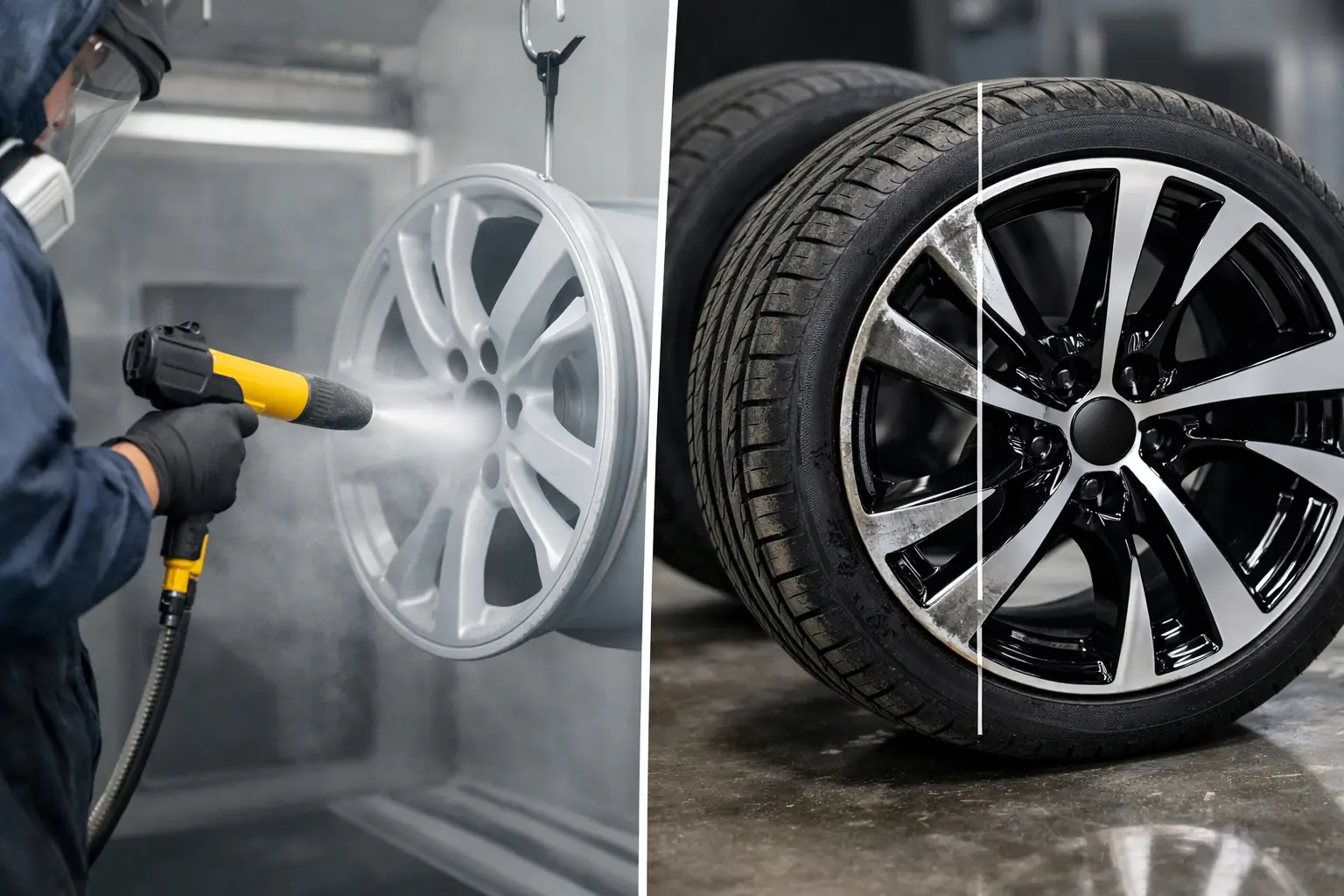
A used car can be mechanically sound, freshly valeted and priced well, yet still sit too long on the forecourt because the wheels let it down. Kerb damage, lacquer peel and corrosion are small details to some buyers, but for a dealership they can quietly chip away at perceived value, buyer confidence and profit. That is exactly why a dealership wheel refurbishment case study matters – it shows how a specialist process can improve stock presentation without the cost of replacing complete alloy wheels.
In this example, the brief was simple. A dealership needed a reliable refurbishment partner for a batch of retail vehicles arriving through part exchange and trade channels. The mix included mainstream hatchbacks, executive saloons and a handful of premium SUVs. Some had minor cosmetic damage only. Others had diamond cut faces with corrosion around the centre caps and along the spokes. A few had wheels that were not just tired looking, but inconsistent from one corner to the next because previous repairs had been carried out to different standards.
The dealership’s problem was not unusual. Preparation time was under pressure, replacement wheels were too expensive for many vehicles, and sending wheels to different suppliers created delays. On top of that, the business needed a finish good enough for retail sale, not a quick cosmetic tidy-up that would look fine in photographs but disappoint a customer on collection.
What the dealership needed from wheel refurbishment
For a dealer, the challenge is rarely just damage. It is speed, consistency and commercial sense all at once. A wheel refurbishment partner has to understand that every day a vehicle is off sale costs money. At the same time, a poor finish can create a bigger problem later if a buyer spots bubbling lacquer or mismatched shades after purchase.
In this case, the dealership needed three things. First, a dependable turnaround that fitted its stock preparation schedule. Second, a finish that suited both everyday retail stock and higher-value vehicles. Third, a process handled by specialists with the right equipment in-house, especially for diamond cut wheels, where shortcuts tend to show.
That last point matters more than many trade buyers realise. Standard painted alloy refurbishment and diamond cut refurbishment are not the same job. Diamond cut wheels require machining to recreate the bright, precise face of the alloy before the wheel is lacquered. If that process is rushed, outsourced poorly or repeated too many times over the life of the wheel, the result can fall short both cosmetically and structurally. A proper assessment at the start saves problems later.
Dealership wheel refurbishment case study – the starting point
The first stage was inspection. Each set of wheels was checked for cosmetic damage, corrosion, previous poor-quality repairs and any signs of structural issues such as cracks or buckles. This is where experience counts. A wheel that looks like a simple cosmetic refurbishment on the vehicle can reveal deeper problems once stripped and examined properly.
The dealership had initially grouped the job as “smartening up stock”, but the inspection showed a more mixed picture. Several wheels were suitable for standard refinishing. A number of premium models needed diamond cut refurbishment to maintain the correct OEM-style appearance. Two wheels required additional repair work before refinishing could even be considered.
This is often where cost control is won or lost. If every damaged wheel is replaced as a precaution, margins disappear quickly. If every damaged wheel is treated as a cosmetic repair without proper checks, the dealership risks comeback and customer dissatisfaction. The right answer sits in the middle – repair where it is safe and appropriate, replace only when necessary, and match the process to the wheel.
The refurbishment approach
Once approved, the work was scheduled to support the dealership’s prep flow rather than disrupt it. That sounds obvious, but it is a genuine advantage when the refurbishment provider understands trade requirements. Vehicles cannot simply wait around for open-ended workshop time.
For the painted alloys, the process involved stripping back the old finish, preparing the surface correctly, addressing kerb damage and corrosion, then refinishing to a high standard. The aim was not to hide defects, but to remove them properly and restore an even, durable finish.
For the diamond cut sets, the wheels were machined in-house after preparation, then lacquered to achieve the crisp face and clean definition expected on premium vehicles. This is where lower-cost alternatives often fall short. A quick cosmetic repair may reduce visible damage, but it will not recreate the same sharp result as a proper workshop-based process.
Where structural concerns were identified, those were resolved before cosmetic finishing. That sequence is essential. There is no value in producing a wheel that looks excellent if the underlying issue has not been dealt with correctly.
The results for the dealership
The most immediate result was visual consistency across the stock. Vehicles that had looked average despite otherwise strong condition presented far better once the wheels matched the rest of the car. This has a direct effect on buyer perception. Clean, well-finished alloys suggest a vehicle has been properly prepared and looked after, even before a customer reads the specification sheet or sits in the driver’s seat.
The dealership also reduced replacement spend. On several vehicles, the cost of specialist refurbishment was significantly lower than sourcing new or used replacement wheels of acceptable quality. That protected margin without lowering presentation standards.
There was also a time benefit. By working with a specialist capable of handling standard and diamond cut refurbishment in-house, the dealership avoided the stop-start delays that often come with juggling multiple suppliers. That helped move vehicles through preparation faster and get them sale-ready sooner.
The less obvious benefit was confidence. Sales teams are far more comfortable presenting a vehicle when they know the wheels have been refurbished properly rather than covered up with a fast cosmetic fix. That confidence carries through into customer conversations and handovers.
Why this case study matters to trade and retail customers
A dealership wheel refurbishment case study is useful because it reflects the same decision many private owners face, just at a larger scale. Do you replace damaged alloys at high cost, accept a poor finish, or choose a specialist refurbishment that restores the wheel properly?
For dealers, the answer is often tied to margin and stock turn. For private motorists, it is more likely to be tied to vehicle pride, resale value and avoiding unnecessary replacement costs. The principle is the same. Quality refurbishment makes sense when the work is assessed correctly, completed with the right equipment and backed by clear workmanship standards.
It also highlights the gap between specialist workshop refurbishment and lower-cost mobile repairs. Mobile solutions can suit very minor cosmetic jobs in some situations, but they are not a like-for-like alternative for every wheel, especially where diamond cut finishes or more involved repairs are concerned. It depends on the wheel, the damage and the finish expected.
What dealerships should look for in a refurbishment partner
The strongest trade relationships are built on consistency rather than one-off price. A dealership needs to know the finish will be right, the advice will be honest and the turnaround will be reliable. If a wheel is not a good candidate for refurbishment, a specialist should say so.
It also pays to ask whether key processes are carried out in-house. That matters for quality control and for lead times. If every diamond cut wheel has to be sent elsewhere, delays become harder to avoid and accountability becomes less clear.
Warranty support is another practical marker of confidence. When a refurbishment specialist stands behind both cosmetic and structural work, it gives reassurance to the dealership and to the eventual buyer.
For retail customers reading this, the same checks apply. If your wheels are damaged, corroded or tired looking, the cheapest quote is not always the best value. The right service is the one that matches the wheel, the damage and the standard you want to achieve.
A well-prepared vehicle always feels different. In this case, refurbished wheels helped turn good stock into retail-ready stock, protected margin and raised the standard of presentation across the board. If your alloys are affecting how a car looks, sells or feels to drive away, specialist refurbishment is often the difference between acceptable and properly finished.